

Deep linking is one of the highest-leverage improvements you can make to a mobile app. The concept is simple: instead of every external link dumping users on your home screen, each link takes them directly to the specific content they came for. A product, a promotion, a friend's profile, a checkout flow, whatever it is, they land there immediately.
That one change touches almost every part of your funnel. Conversion rates improve. Users retain better. Campaigns perform differently. Attribution becomes reliable. If you want the technical foundation first, our guide on how deep linking works covers the mechanics behind all of this. The ripple effect is wide, which is why deep linking is not a feature you implement once and forget. It is infrastructure that pays dividends across your entire operation.
Here are the ten most concrete benefits, with examples you can carry directly into a product conversation.
1. Higher Conversion Rates
The most direct benefit is fewer drop-offs between a link tap and a completed action.
When a user taps a link to a specific product and lands on your app's home screen, they face friction: find the search bar, type the product name, locate the right item, then proceed. Every step is an opportunity to abandon. When that same link takes them directly to the product page, the path to purchase is one tap shorter, and the user's intent is still hot.
Research from Google and internal case studies from e-commerce apps consistently show that deep-linked campaigns outperform non-deep-linked campaigns by 2x or more on conversion rate. The mechanism is not mysterious. You are removing friction at the moment when user intent is highest.
2. Better User Retention
Users who reach relevant content on their first session are more likely to return. This is not just intuition; it reflects how apps get evaluated.
If someone installs an app after clicking a specific offer and then has to hunt for that offer manually, the app feels broken. The experience does not match the expectation set by the link. That user is unlikely to come back.
Deep linking closes that gap. The user arrives where they expected to arrive. The app fulfills the promise of the link. That positive first interaction increases the probability of a second session, and second sessions are one of the strongest leading indicators of long-term retention.
For apps with social components, this effect is even more pronounced. When a user taps a friend's shared content and lands directly on it, the social loop closes cleanly. The app works the way the user expects a modern app to work.
3. Improved Onboarding
Onboarding is one of the most critical sequences in any mobile app, and deep linking makes it substantially better.
The standard onboarding problem: a user signs up on your website, gets a verification email, taps the link, and lands on the app's generic home screen. Now they have to figure out where to go. The momentum from signup evaporates.
With deep linking, the verification email link opens the app and completes the verification in the same motion, then routes the user to the first meaningful step of onboarding. That could be filling out a profile, connecting an integration, viewing a tutorial, or wherever the data shows new users need to go first.
The same principle applies to invited users. If a teammate invites someone to a collaboration app, the invite link should open the app and land the new user inside the shared workspace, not on a sign-in screen that has no memory of the invite. For a deeper look at how this works in practice, the deep linking concepts guide covers the full mechanics.
4. Accurate Attribution
Without deep linking, marketing attribution is a guessing game.
A user sees an ad, searches the App Store, installs the app, and opens it. You know an install happened. You do not know it came from that ad. You are left inferring attribution from probabilistic fingerprinting or approximate device matching, both of which have accuracy limits and have come under increasing scrutiny with privacy changes on iOS and Android.
Deep links, specifically deferred deep links, carry attribution data through the install process. When the link is tapped, the source is recorded. When the app opens after installation, that attribution is retrieved and credited to the right campaign or channel. You get deterministic attribution: this install came from this link, which was part of this campaign.
Accurate attribution means you stop guessing at ROAS. You stop over-investing in channels that look productive but are just capturing organic intent. You start making budget decisions based on actual cause and effect.
5. Better Email and Push Campaign Performance
Email and push notification campaigns are two of the highest-ROI engagement channels for mobile apps. Deep linking makes both significantly more effective.
For email: a re-engagement campaign that links directly to a user's abandoned cart, a personalized recommendation, or a time-sensitive offer performs better than a campaign that links to the home screen. The user clicks because the subject line promised something specific. The link should deliver that specific thing.
For push notifications: a push about a new message should open the conversation, not the inbox. A push about a completed order should open the order status screen. This sounds obvious, but a surprising number of apps get this wrong, which trains users to ignore notifications because the payoff does not match the preview.
Apple's Human Interface Guidelines explicitly recommend linking push notifications to the relevant content. The reason is simple: it makes notifications useful instead of disruptive, and useful notifications get engaged with.
6. Referral Program Enablement
Referral programs are one of the most efficient user acquisition channels available. Deep linking is what makes them actually work end-to-end.
Here is the problem without deep linking: a user shares a referral link. Their friend taps it, installs the app, and is prompted to enter a referral code manually. Half of them will not bother. The referral is lost even though the intent was there.
With deferred deep linking, the referral context travels through the install. When the new user opens the app for the first time, the app reads the referral data from the original link and automatically applies the referral. No code entry. No friction. The referrer gets credited, the new user gets their reward, and the loop closes.
This is not a small difference. Apps that implement context-preserving referral links see substantially higher referral completion rates than apps that rely on manual code entry. The cleaner the referral experience, the more users share.
7. App Store Optimization Through App Indexing
Deep links can improve how your app appears in search results, both in Google Search and in on-device search.
Google's app indexing allows content inside Android apps to be surfaced in search results. When a user searches for something related to your app's content, a direct link to that content inside the app can appear alongside or instead of your website result. Tapping that result opens the app directly to the relevant screen.
On iOS, Spotlight search and Siri suggestions can surface app content for users who already have the app installed. If your app's content is properly indexed via NSUserActivity or Core Spotlight, users find it faster, which increases engagement without any additional acquisition spend.
The prerequisite for all of this is having clean, consistent deep link routes throughout your app. You cannot index content you cannot link to.
8. Reduced User Friction at Every Touchpoint
Every unnecessary step between a user's intent and their destination costs you conversions and goodwill. Deep linking removes those steps systematically.
Consider the common paths that benefit directly:
- A customer service team sends a support link that opens directly to the relevant settings screen in the app.
- A marketing email about a sale opens the sale section, not the home screen.
- A QR code on product packaging opens the product registration flow, not a search page.
- A social share from inside the app opens that specific piece of content for the recipient, not the app's feed.
Each of these is a small improvement in isolation. Collectively, they add up to an app that consistently meets user expectations, which is a meaningful competitive advantage in categories where experience differentiation matters.
Tolinku's deep linking platform is built specifically to manage these routes across all channels without requiring separate integrations for each use case.
9. Cross-Platform Consistency
Most apps operate on both iOS and Android, and many have a companion web experience as well. Keeping the user experience consistent across all three is harder than it sounds.
iOS uses Universal Links. Android uses App Links. Both have their own configuration requirements, their own fallback behaviors, and their own failure modes. Understanding the different types of deep links helps clarify which mechanism to use and when. A link that works correctly on iOS may behave differently on Android if the implementations are not kept in sync.
Deep linking infrastructure handles this abstraction. You define one link. The platform resolves it correctly depending on the device, the OS version, and whether the app is installed. If the app is not installed, the user lands on the appropriate fallback, the App Store, Google Play, or a web page, and can pick up the deep link context after they install.
This consistency matters for brand trust. When a link works differently on different devices, it signals that the experience was not designed carefully. When it works the same everywhere, it signals the opposite.
10. Better Analytics
Deep linking gives you a measurement layer that generic analytics cannot provide.
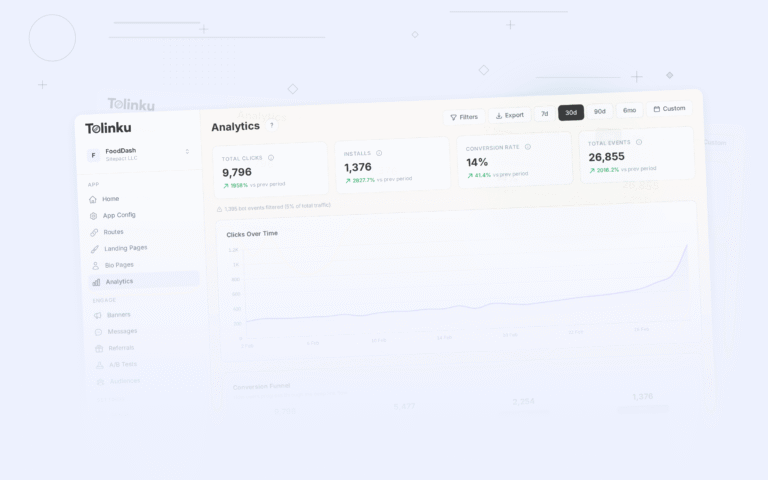
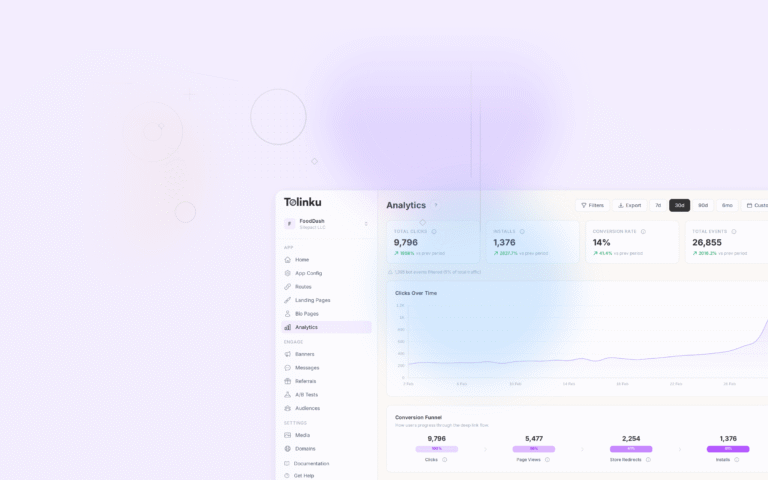
When every campaign, channel, and touchpoint uses properly structured deep links, you can attribute downstream events (purchases, signups, upgrades) back to their original source with precision. You can compare the quality of users from different acquisition channels, not just the volume. You can see which campaigns drive users who actually retain versus users who churn in the first week.
This data changes how you run marketing. It moves the optimization target from cost-per-install to cost-per-retained-user or cost-per-purchase. Those are the metrics that actually predict long-term business health.
Deep link analytics also expose problems in your funnel that session analytics alone would miss. If a particular link has high tap volume but low conversion, the deep link destination might be wrong. If users from one campaign retain at half the rate of another, the audience or the promise of the campaign might be mismatched with the product.
None of this analysis is possible if your links do not carry structured attribution data from the start. For a data-driven look at what these improvements mean in dollar terms, see our guide on deep linking ROI.
The benefits above are not theoretical. They show up in the data when you implement deep linking correctly across your acquisition, retention, and engagement channels.
The practical starting point is to audit every place you currently link to your app: emails, push notifications, social profiles, ad campaigns, your website, and any printed or offline materials. For each one, ask whether the destination is as specific as it could be. Most apps find significant room for improvement in that audit alone.
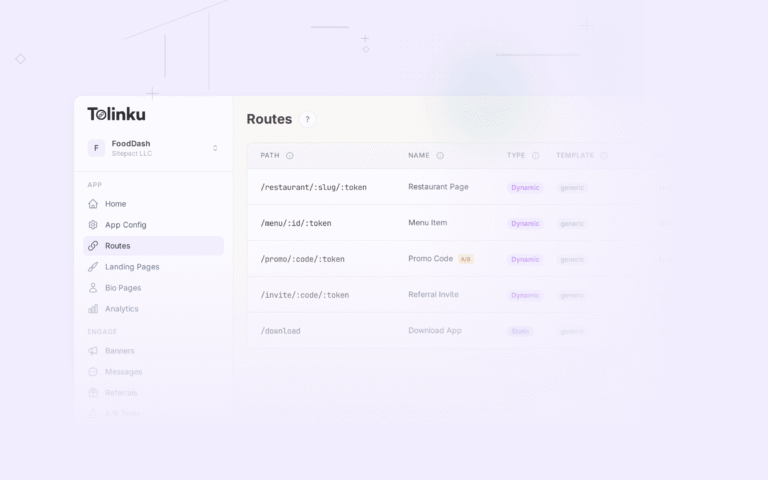
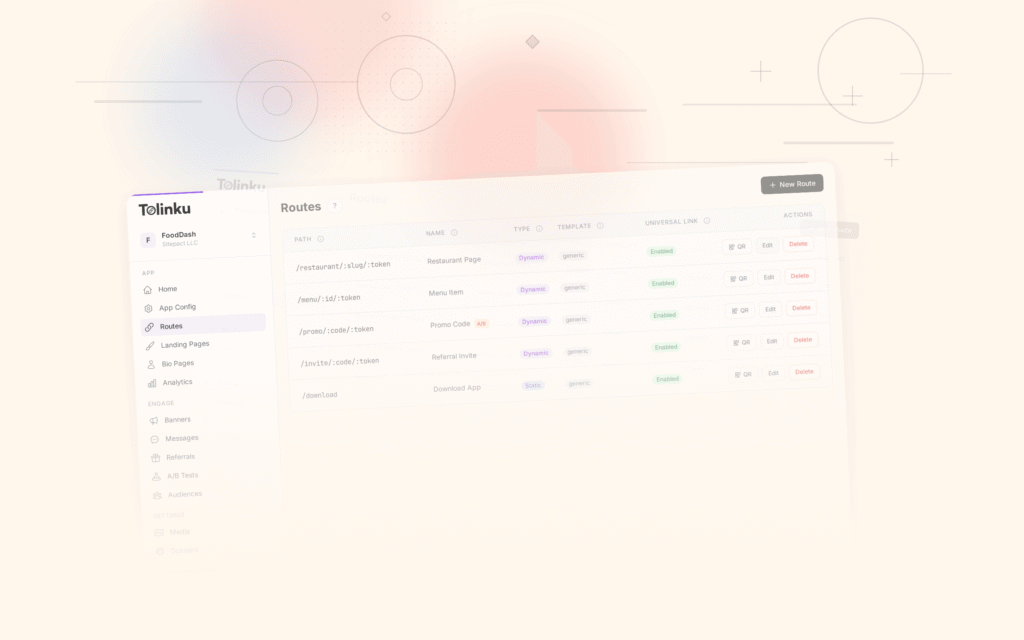
From there, the implementation work is mostly routing: defining which screens map to which URL paths, handling fallbacks for users who do not have the app installed, and passing attribution data through the install process for deferred links.
For the full technical overview of how each deep link type works, see the deep linking concepts documentation.
Get deep linking tips in your inbox
One email per week. No spam.