

The deep linking platform market is consolidating and evolving. MMP acquisitions, privacy regulation, Firebase Dynamic Links' shutdown, and the rise of privacy-first alternatives are reshaping how teams choose and use deep linking tools.
This article covers the major trends affecting deep linking platforms in 2026. For the future of mobile deep linking, see the future of mobile deep linking. For how standards are changing, see deep linking standards in 2026.
Trend 1: Privacy-First is Now Default
The era of fingerprinting-based deep linking is ending. Three forces are driving this:
Apple's ATT. With ~25-30% opt-in rates, most iOS users cannot be tracked across apps. Platforms that relied on IDFA for attribution and deferred deep linking had to adapt.
Android Privacy Sandbox. Google is deprecating the Android advertising ID in favor of privacy-preserving APIs. Attribution platforms must migrate to the Attribution Reporting API.
Regulation. GDPR enforcement is increasing. The EU Digital Markets Act restricts how gatekeepers can use cross-platform data. CCPA/CPRA in California gives users the right to opt out of data selling.
Platform impact: Deep linking platforms that do not rely on fingerprinting or advertising IDs are at an advantage. They work the same regardless of consent status, simplifying both the technical integration and the compliance burden.
Trend 2: MMP Consolidation
The MMP market is consolidating through acquisitions:
- Adjust acquired by AppLovin (2021). Adjust is now part of AppLovin's ad tech stack.
- Singular raised additional funding and expanded into cost aggregation.
- Kochava remained independent but faced FTC scrutiny over data practices.
- Branch expanded from deep linking into a broader "mobile linking platform."
What this means for teams:
- MMP platforms are increasingly oriented toward ad tech use cases, not pure deep linking.
- Vendor independence is harder to maintain as MMPs align with ad networks.
- Teams that only need deep linking are paying for attribution features they do not use.
Trend 3: Firebase Dynamic Links Fallout
Google's deprecation of Firebase Dynamic Links forced thousands of apps to find alternatives. The fallout:
- Migration wave. Apps that relied on FDL for free deep linking are evaluating paid alternatives and native implementations.
- Distrust of free services. Teams are wary of building on free platforms that can be shut down. Sustainable business models matter.
- Opportunity for focused platforms. FDL's shutdown created demand for deep linking platforms that are not bundled with attribution.
Trend 4: Unbundling Deep Linking from Attribution
Historically, deep linking was bundled with mobile attribution because MMPs offered both. In 2026, teams are unbundling:
- Use an MMP for attribution (if you run paid campaigns).
- Use a dedicated deep linking platform for link creation, routing, smart banners, and web-to-app transitions.
This makes sense because:
- Attribution pricing is based on conversion volume. Deep linking pricing is based on click volume. Paying attribution prices for deep links is expensive.
- Attribution SDKs are 3-5x larger than deep linking SDKs.
- Teams that do not run paid acquisition do not need attribution at all.
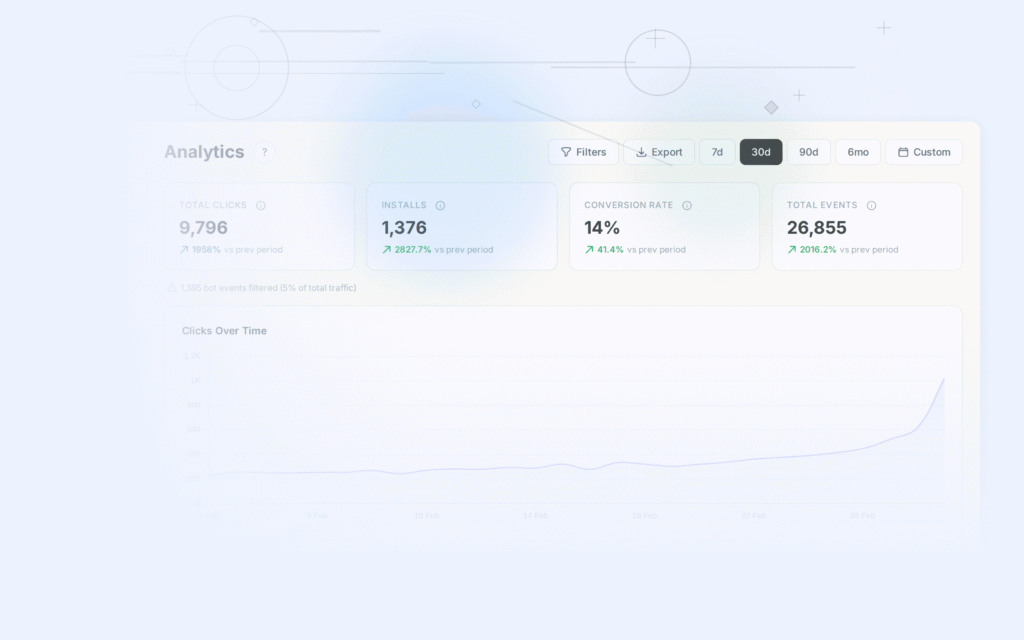
The unbundling trend benefits focused platforms like Tolinku that provide deep linking without attribution overhead.
Trend 5: Transparent Pricing
Enterprise sales-led pricing is losing ground to self-serve, transparent pricing:
- Developers expect to see pricing before talking to sales.
- Startups and indie developers cannot justify sales calls for a $39/month tool.
- Usage-based pricing with published rates reduces procurement friction.
Platforms with public pricing pages acquire customers faster because the evaluation process is shorter.
Trend 6: Lightweight SDKs
App size optimization is increasingly important:
- Emerging markets. Users in India, Brazil, and Southeast Asia have limited storage and slow connections. Every MB matters.
- App Store optimization. Smaller apps have higher install conversion rates.
- Cold start performance. Users expect apps to launch in under 1 second.
The trend is toward smaller, focused SDKs. Monolithic SDKs that bundle attribution, analytics, and deep linking in a single package are losing appeal.
Trend 7: QR Code Integration
QR codes have become a permanent part of deep linking strategy:
- Physical-to-digital bridges. Product packaging, business cards, event signage, restaurant menus.
- Print marketing. Magazines, billboards, direct mail.
- Payments. QR-based payment flows in some markets.
Deep linking platforms are adding QR code generation and analytics as standard features rather than premium add-ons.
Trend 8: Smart Banner Evolution
Smart banners (web-to-app promotion banners) are becoming more sophisticated:
- Contextual targeting. Show different banners based on the page content, user behavior, or referrer.
- A/B testing. Test banner copy, design, and placement.
- Performance tracking. Measure banner-to-install conversion rates.
- Non-intrusive design. Banners that promote the app without degrading the web experience.
Apple's native Smart App Banner remains popular for its simplicity, but custom banners provide more control over the user experience.
What to Watch
Short Term (2026)
- Android Privacy Sandbox rollout affecting attribution accuracy.
- More Firebase Dynamic Links migrations as the shutdown date approaches.
- Continued ATT adoption driving privacy-first platform growth.
Medium Term (2027-2028)
- Possible standardization of deep linking metadata (Schema.org, Open Graph extensions).
- AI assistants generating and interpreting deep links.
- Wearable and IoT devices creating new deep linking contexts.
Tolinku and These Trends
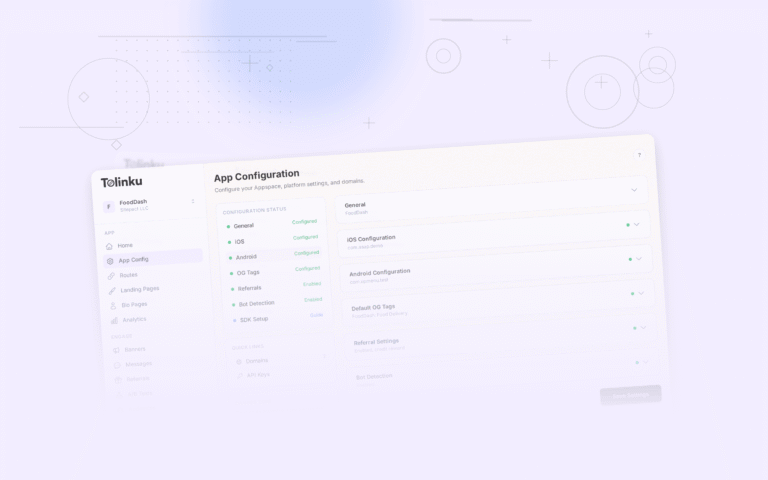
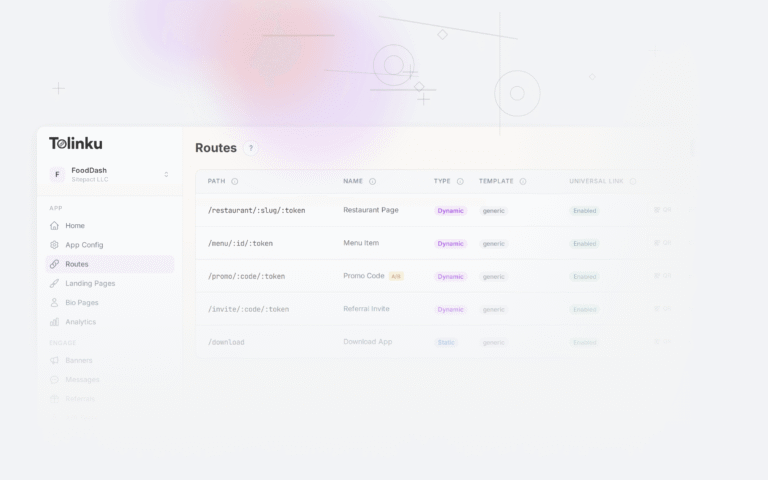
Tolinku aligns with the privacy-first, unbundled, transparent-pricing trends. It provides deep linking without attribution, lightweight SDKs, published pricing, and self-serve signup. Configure your deep links in the Tolinku dashboard.
For the full platform comparison, see deep linking platform comparison.
Get deep linking tips in your inbox
One email per week. No spam.