Deep linking is not free. It requires implementation, testing, monitoring, and maintenance. Before investing, you should know whether it will actually improve your metrics. Some apps see dramatic improvements from deep linking. Others get minimal benefit. The difference depends on your app type, user acquisition channels, and content structure.
For the business case, see measuring deep linking ROI for your mobile app. For the benefits, see 10 benefits of deep linking for mobile apps.
When Deep Linking Adds Clear Value
You Share Content Outside the App
If users share products, articles, profiles, or other content via links (email, social media, messaging), deep linking ensures recipients land on that content in the app instead of a web page.
High value for: E-commerce, social media, news/media, marketplace apps.
Example: A user shares a product link on WhatsApp. With deep linking, the recipient opens the app directly to that product. Without deep linking, they open a web page that may prompt them to install the app, losing the context.
You Run Multi-Channel Marketing Campaigns
If you send emails, push notifications, SMS, or social media posts with links to specific app content, deep links let you measure which channels and campaigns drive the most engagement.
High value for: Any app with marketing campaigns that link to specific content.
Example: An email promoting a sale links to https://app.example.com/offers/summer-sale. With deep linking, this opens the sale directly in the app. You can measure the email-to-conversion rate for this specific campaign.
You Have a Referral Program
Referral links need to carry the referrer's identity through the install flow. Deferred deep links preserve the referral code so both the referrer and referee get credited.
High value for: Apps with viral growth, referral programs, invite systems.
Example: User A shares a referral link. User B clicks it, installs the app, and signs up. The deferred deep link carries User A's referral code through the install, and both users receive their rewards.
You Have Rich, Addressable Content
If your app has content that can be identified by a URL (products, articles, profiles, events, listings), deep linking connects the web and the app.
High value for: E-commerce, content/media, marketplace, directory apps.
Low value for: Single-purpose utility apps (calculator, flashlight) with no addressable content.
You Use QR Codes for Offline-to-Online
QR codes on physical media (packaging, posters, receipts, business cards) need to work whether the user has the app or not. Deep links with web fallback handle both cases.
High value for: Retail, restaurants, events, real estate, travel.
When Deep Linking Has Limited Value
Your App Has No Shareable Content
If your app is a single-screen utility (timer, calculator, note-taking without sharing), there is no content to deep link to. Users open the app from the home screen; there is no external link that would improve the experience.
Consider instead: A simple home screen icon is sufficient. No deep linking needed.
Your Entire User Base Is Already in the App
If you only communicate with users through in-app messages and push notifications (which the app handles directly), you do not need Universal Links. Push notifications already open the app; the notification payload carries the routing data.
Consider instead: Push notification payloads with custom URL schemes or route identifiers (no Universal Link/App Link infrastructure needed).
You Have a Very Small User Base
If your app has 100 users and you send 50 emails a month, the engineering investment in deep linking may not be justified. The improvement in conversion rate (say, 15% better) applied to 50 emails produces a few extra conversions.
Consider instead: Manual links to your website. Invest in deep linking when your scale justifies it.
Your App Is Desktop-Only
Deep linking is a mobile technology. If your app runs only on desktop (web or native desktop), Universal Links and App Links do not apply.
Consider instead: Standard web URLs with authentication for returning users.
Feature Prioritization
If you decide deep linking is worth implementing, prioritize features by impact:
Priority 1: Basic Deep Links (Universal Links + App Links)
Effort: 1-2 days. Impact: Users who click links to your app open the right screen instead of the home screen.
What you need:
- AASA file hosted on your domain.
- assetlinks.json hosted on your domain.
- URL handling in the app (route matching).
- Web fallback page for users without the app.
Priority 2: Campaign Tracking
Effort: 1 day. Impact: You can measure which campaigns and channels drive engagement.
What you need:
- UTM parameters on deep links.
- Click analytics (recording clicks with source/medium/campaign).
- Dashboard or report showing performance by campaign.
Priority 3: Deferred Deep Links
Effort: 3-5 days (or use a platform). Impact: New users who install from a link land on the right content on first open.
What you need:
- Click recording with device attributes.
- Matching logic on first app open.
- Server infrastructure for storing and matching clicks.
Priority 4: Smart Banners
Effort: 1-2 days. Impact: Web visitors see a banner prompting them to open the content in the app.
What you need:
- JavaScript banner on your website.
- Detection of whether the user has the app installed (limited).
- Deep link from the banner.
Priority 5: In-App Browser Handling
Effort: 1-2 days. Impact: Users clicking links in Facebook/Instagram can still reach the app.
What you need:
- Bounce page strategy.
- User agent detection for in-app browsers.
- System browser redirect mechanism.
Decision Framework
Answer these questions to decide:
| Question | If Yes | If No |
|---|---|---|
| Do users share content from your app? | High priority | Lower priority |
| Do you send marketing emails/push with links to specific content? | High priority | Lower priority |
| Do you have a referral program? | High priority for deferred deep links | Skip deferred |
| Do you run paid campaigns that link to the app? | Important for attribution | Less urgent |
| Is your app content-rich with many addressable screens? | Deep linking adds significant value | Limited value |
| Do you use QR codes for offline marketing? | Deep links are essential | Not needed |
| Is your monthly active user base over 10,000? | Investment is justified | Consider waiting |
If you answered "Yes" to 3 or more, deep linking should be a priority. If you answered "Yes" to 1-2, implement basic deep links and defer advanced features. If you answered "No" to all, you may not need deep linking right now.
The Incremental Approach
You do not need to implement everything at once:
- Week 1: Basic Universal Links and App Links. Test from Notes/Chrome.
- Week 2: Add UTM parameters and basic click analytics.
- Month 2: Add deferred deep links (or integrate a platform).
- Month 3: Add smart banners and in-app browser handling.
- Ongoing: Monitor, optimize, and fix issues as they arise.
Tolinku for Getting Started
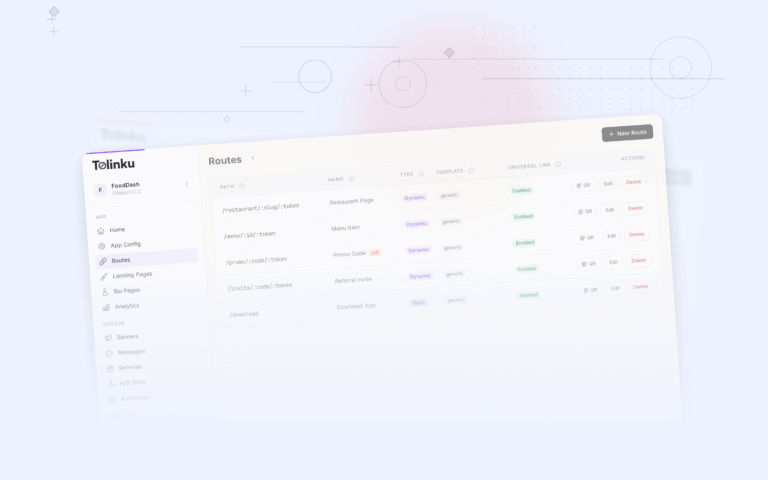
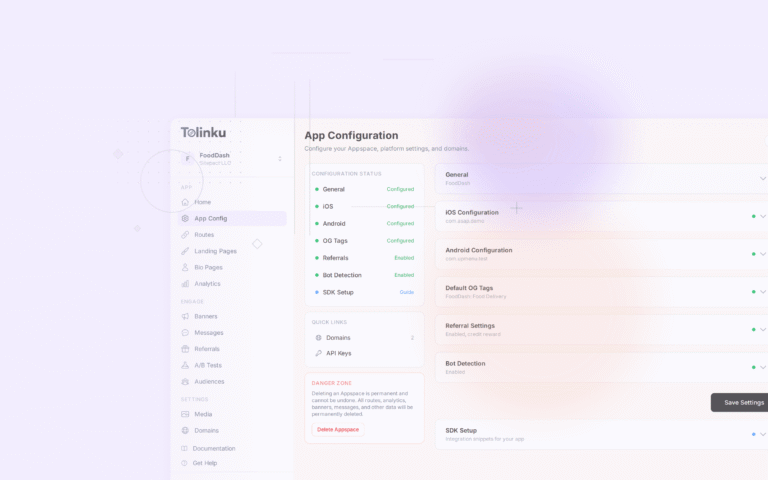
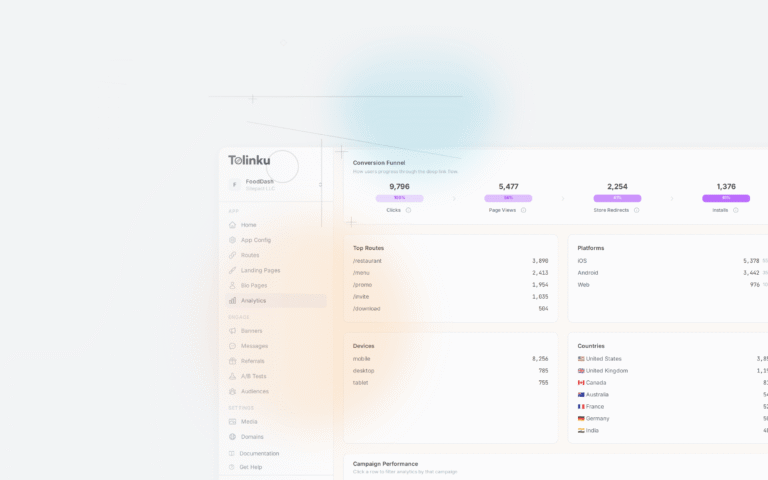
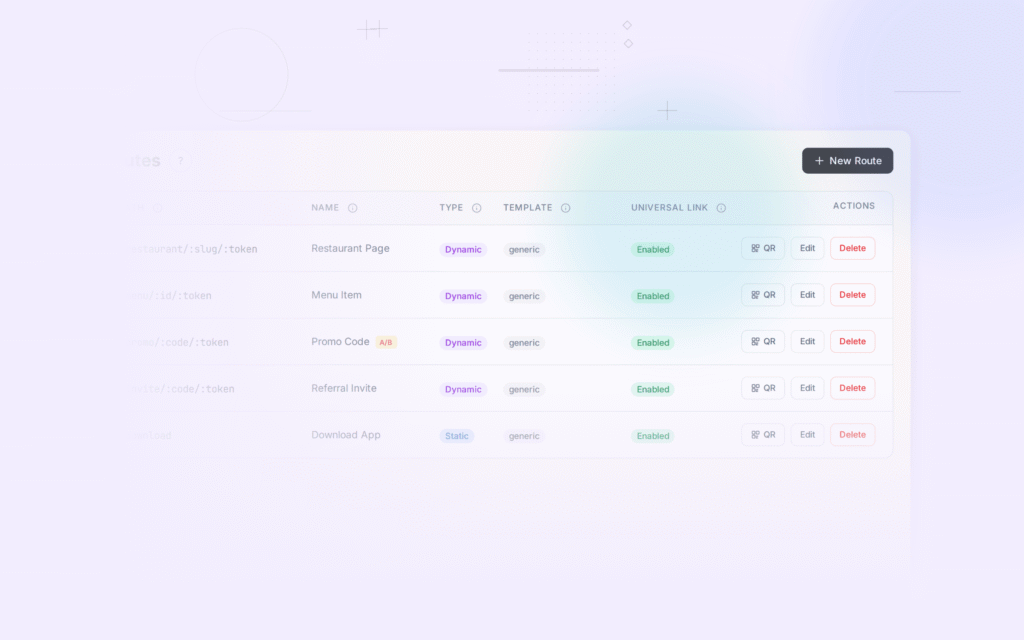
Tolinku provides all deep linking features (Universal Links, App Links, deferred deep links, analytics, smart banners) in a single platform. If you decide deep linking is right for your app, see the getting started guide.
For the business case, see measuring deep linking ROI for your mobile app. For the complete overview, see the complete guide to deep linking in 2026.
Get deep linking tips in your inbox
One email per week. No spam.