

Paid acquisition gets you users fast, but organic growth gets you users sustainably. The best mobile apps don't choose one or the other; they build a foundation of organic channels that compound over time, then use paid UA to accelerate growth on top of that foundation.
This guide covers the most effective organic growth channels for mobile apps, from app store search to community building, with practical advice on how to get started with each.
1. App Store Search (ASO)
App store search accounts for 65-70% of all app discoveries. Optimizing for it is the single highest-leverage organic growth activity.
The basics:
- Research keywords your target users search for
- Include them in your app title, subtitle (iOS), and description (Google Play)
- Maintain a 4.0+ star rating
- Update regularly (stores favor active apps)
- Optimize screenshots and preview videos for conversion
ASO compounds: once you rank for a keyword, you continue getting downloads without ongoing effort. See App Store Optimization: The Complete Guide for a detailed walkthrough.
2. Referral Programs
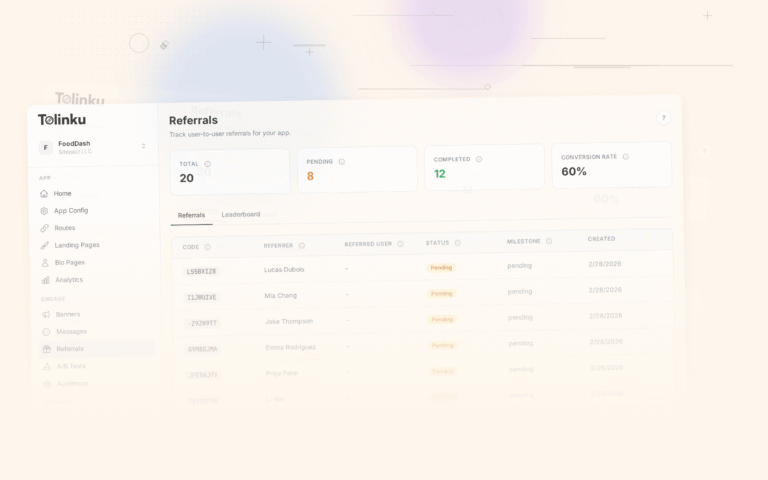
Your existing users are your best marketers. A well-structured referral program turns every happy user into a growth channel.
The mechanics:
- Give each user a unique referral link they can share
- Reward both the referrer and the new user (double-sided incentives)
- Make sharing frictionless (pre-composed messages, one-tap sharing)
- Use deferred deep linking so referred users land on the right screen after installing
Referral programs scale with your user base. At 100 users, a 5% referral rate adds 5 users. At 100,000 users, the same rate adds 5,000. The per-user cost is typically well below paid acquisition.
For implementation details, see Building Referral Programs That Actually Work.
3. Content Marketing
Content marketing creates a pipeline of potential users by answering questions they're already searching for.
Blog Content
Write articles that address problems your app solves:
- A budgeting app writes about "how to save money on groceries"
- A fitness app writes about "beginner workout routines"
- A project management app writes about "how to run effective standups"
Each article targets a search query. Over time, hundreds of articles create a massive surface area for discovery. Include clear CTAs and deep links to relevant in-app content.
Video Content
YouTube is the second-largest search engine. Create content that shows your app solving real problems:
- Tutorials showing the app in action
- "Day in the life" content featuring your app naturally
- Comparison videos ("How I switched from X to our app")
Social Media Content
Platform-specific content that showcases your app's value:
- TikTok/Instagram Reels: Quick tips, behind-the-scenes, user stories (15-60 seconds)
- Twitter/X: Threads about the problem space your app addresses
- LinkedIn: For B2B apps, share case studies and insights
The goal isn't direct promotion. It's providing value that makes people want to try your app.
4. SEO (Web Presence)
If your app has a companion website (and it should), search engine optimization drives a steady stream of potential users.
Landing Pages
Create dedicated landing pages for each key feature and use case:
yourapp.com/features/expense-trackingyourapp.com/use-cases/freelancersyourapp.com/compare/vs-competitor
Each page targets different search queries and includes clear app download CTAs.
Web App or PWA
If your app has a web version, it serves as a discovery channel. Users find your tool through search, use it in the browser, and convert to the native app for a better experience.
Smart Banners
For users visiting your website on mobile, smart banners provide a non-intrusive prompt to download or open your app. These convert at 5-15% for engaged mobile visitors.
5. Social Media (Organic)
Organic social media is slow but builds genuine community.
Platform Selection
Don't try to be everywhere. Pick 2-3 platforms where your target audience spends time:
- Instagram: Visual apps, lifestyle, e-commerce, fitness
- TikTok: Consumer apps targeting under-35 demographics
- Twitter/X: Tech, productivity, developer tools
- LinkedIn: B2B apps, professional tools
- Reddit: Niche communities, technical audiences
Engagement Over Broadcasting
The apps that grow organically on social media don't just post promotional content. They:
- Respond to comments and DMs
- Join relevant conversations
- Share user-generated content
- Participate in trending topics (when relevant)
- Share behind-the-scenes content (product development, company culture)
User-Generated Content (UGC)
Encourage users to share their experience with your app. Feature their content (with permission) on your channels. UGC is more trusted than brand content and creates a flywheel: users share, you amplify, new users discover.
6. Word of Mouth
Word of mouth isn't just "hope people talk about us." It can be engineered.
Build a Product Worth Talking About
The foundation of word of mouth is a product that delights users. Focus on:
- Moments of delight (unexpected value, smart features, great design)
- Features that involve other people (sharing, collaboration, social features)
- Visible results that users want to show off (fitness progress, savings milestones, creative outputs)
Reduce Sharing Friction
Make it easy to share from within the app:
- One-tap share buttons with pre-composed messages
- Share cards with rich previews (images, titles, descriptions)
- Deep links that take recipients directly to the relevant content
7. Community Building
Building a community around your app creates a self-sustaining growth engine.
Where to Build
- Discord: Real-time conversations, popular with gaming and tech apps
- Reddit: Create a subreddit for your community
- Facebook Groups: Good for lifestyle and interest-based communities
- In-app forums: Keeps the community within your ecosystem
What Makes Communities Work
- Shared identity: Members feel like they belong to something
- Utility: The community provides value beyond the app (tips, networking, support)
- Regular engagement: Community managers who participate daily, not weekly
- User recognition: Highlight active members, feature their contributions
Communities take months to build but become a durable competitive advantage once established.
8. Cross-Promotion and Partnerships
Partner with complementary (non-competing) apps or brands to reach new audiences.
App Cross-Promotion
If you make a workout app, partner with a nutrition app. Each recommends the other to its users. Both user bases are relevant (fitness-minded people), and the promotion feels helpful, not spammy.
Brand Partnerships
Partner with brands that share your audience. A travel planning app might partner with an airline loyalty program. A meditation app might partner with a wellness brand. These partnerships bring credibility and access to established audiences.
Influencer Collaborations
Organic influencer relationships (not paid placements) can drive authentic recommendations. Send your app to relevant micro-influencers (10k-100k followers) and let them try it genuinely. Authentic endorsements carry more weight than scripted ads.
9. PR and Media Coverage
Getting written about by tech publications, industry blogs, and mainstream media creates awareness spikes that drive downloads.
What Makes a Story
- Launch: New app launches still get coverage if the product is interesting
- Milestones: User count milestones, revenue milestones, unique usage patterns
- Data stories: If your app generates interesting data, share it ("Our users collectively saved $X million")
- Founder story: Compelling origin stories get featured in startup publications
Where to Pitch
- Product Hunt (for launches and major updates)
- TechCrunch, The Verge (for significant products)
- Industry-specific publications (fintech blogs for finance apps, etc.)
- Podcast appearances (growing influence in app discovery)
10. Email Marketing
Email remains one of the highest-converting channels for bringing lapsed users back and converting web visitors into app users.
List Building
- Website visitors who sign up for content or a waitlist
- In-app users who provide their email (for account creation or newsletters)
- Event attendees and webinar participants
Effective Email Strategies
- Onboarding sequences: Guide new users through key features (with deep links to each feature)
- Re-engagement campaigns: Bring back users who haven't opened the app in 7-30 days
- Feature announcements: Notify users about new capabilities
- Educational content: Tips and tricks that demonstrate value
Building an Organic Growth Engine
The mistake most apps make is treating growth channels in isolation. The real power comes from channels reinforcing each other:
- Content marketing drives web traffic
- SEO captures search demand created by social media presence
- Community members become referral champions
- Referral links drive installs that improve ASO rankings
- Better ASO rankings drive more organic search installs
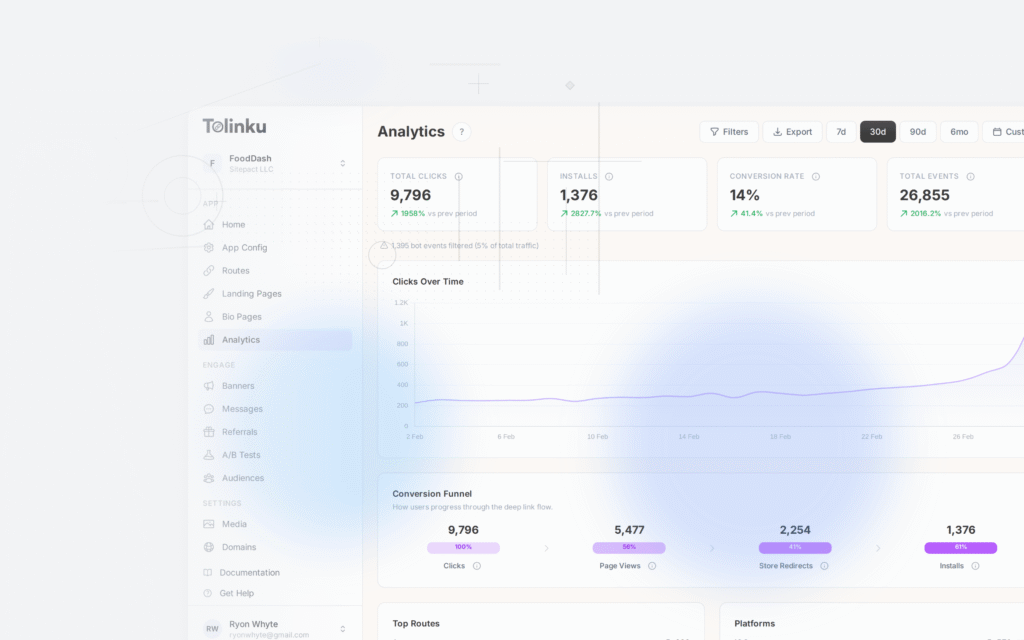
Start with 2-3 channels. Master them before adding more. Measure everything so you know where to double down.
For a comprehensive growth strategy framework, see Mobile App Growth: 25 Strategies That Work.
Get deep linking tips in your inbox
One email per week. No spam.