Choosing a deep linking platform is a decision that affects your app's user experience, marketing effectiveness, and engineering velocity. Switching platforms later is costly and disruptive. This checklist helps you evaluate platforms systematically so you make the right choice the first time.
For platform comparisons, see deep linking platform comparison. For total cost analysis, see total cost of ownership for deep linking.
How to Use This Checklist
For each criterion, score the platform on a 0-3 scale:
- 0: Not supported or not available.
- 1: Partially supported or with significant limitations.
- 2: Fully supported.
- 3: Exceeds expectations (exceptional implementation).
Multiply each score by the weight for your use case (1 = nice to have, 2 = important, 3 = critical). Sum the weighted scores to compare platforms.
Core Deep Linking Features
| Criterion | Weight | Platform A | Platform B |
|---|---|---|---|
| Universal Links (iOS) | 3 | ___ | ___ |
| App Links (Android) | 3 | ___ | ___ |
| Deferred deep linking | 3 | ___ | ___ |
| Custom link domains | 2 | ___ | ___ |
| Web fallback pages | 3 | ___ | ___ |
| Platform detection (iOS/Android/web) | 3 | ___ | ___ |
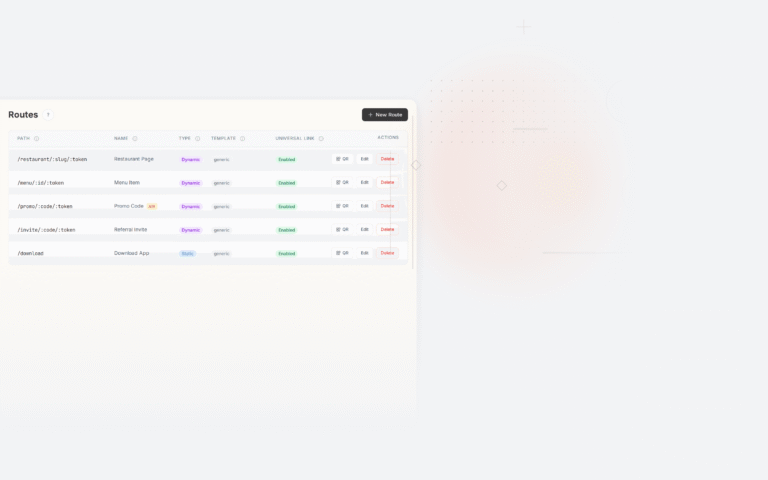
| Route patterns (dynamic paths) | 2 | ___ | ___ |
| QR code generation | 1 | ___ | ___ |
| Smart banners | 2 | ___ | ___ |
| Link previews (Open Graph) | 1 | ___ | ___ |
Notes:
- Universal Links and App Links are non-negotiable. If a platform does not support both, eliminate it.
- Deferred deep linking quality varies significantly between platforms. Test it; do not just take the vendor's word.
- Route patterns let you define
/products/:idinstead of creating individual links for every product.
SDK and Integration
| Criterion | Weight | Platform A | Platform B |
|---|---|---|---|
| iOS SDK available | 3 | ___ | ___ |
| Android SDK available | 3 | ___ | ___ |
| React Native SDK | 2 | ___ | ___ |
| Flutter SDK | 2 | ___ | ___ |
| Web SDK / JavaScript | 2 | ___ | ___ |
| SDK size (< 1 MB) | 2 | ___ | ___ |
| SDK init time (< 100ms) | 2 | ___ | ___ |
| Integration time (< 1 day) | 2 | ___ | ___ |
| Documentation quality | 2 | ___ | ___ |
| Code samples and tutorials | 1 | ___ | ___ |
Notes:
- Check SDK size carefully. Some platforms bundle attribution, analytics, and ad SDKs into the deep linking SDK, inflating size.
- Test integration time by having a developer prototype the integration. Vendor estimates are optimistic.
- Documentation quality is a proxy for product maturity. Poor docs usually mean a rough developer experience.
Analytics and Reporting
| Criterion | Weight | Platform A | Platform B |
|---|---|---|---|
| Click tracking | 2 | ___ | ___ |
| App open tracking | 2 | ___ | ___ |
| Conversion tracking | 1 | ___ | ___ |
| Geographic data | 1 | ___ | ___ |
| Device/OS breakdown | 1 | ___ | ___ |
| Referrer tracking | 2 | ___ | ___ |
| Real-time analytics | 1 | ___ | ___ |
| Data export (CSV/API) | 2 | ___ | ___ |
| Analytics retention period | 2 | ___ | ___ |
| Webhooks | 2 | ___ | ___ |
Notes:
- Analytics retention varies widely. Some free tiers retain data for 7 days; some paid tiers retain for 90 days or 1 year.
- Webhooks are important if you integrate deep link events into your own analytics pipeline.
Pricing and Commercial
| Criterion | Weight | Platform A | Platform B |
|---|---|---|---|
| Transparent pricing (public) | 2 | ___ | ___ |
| Free tier available | 2 | ___ | ___ |
| Free tier is functional | 2 | ___ | ___ |
| Predictable billing | 2 | ___ | ___ |
| Self-serve signup | 2 | ___ | ___ |
| No sales call required | 1 | ___ | ___ |
| Monthly billing option | 1 | ___ | ___ |
| Reasonable overage policy | 2 | ___ | ___ |
| Cost at your volume | 3 | ___ | ___ |
| Cost at 10x your volume | 2 | ___ | ___ |
Notes:
- "Cost at 10x your volume" matters because you want a platform you can grow with. If costs become prohibitive at scale, you will face a migration.
- Beware platforms where the only way to learn pricing is to talk to sales. This usually means enterprise pricing that does not fit small or mid-sized teams.
- Calculate the total annual cost, not just the monthly rate. Include overages, additional seats, and add-on features.
Reliability and Support
| Criterion | Weight | Platform A | Platform B |
|---|---|---|---|
| Published uptime SLA | 2 | ___ | ___ |
| Status page available | 2 | ___ | ___ |
| Historical uptime record | 2 | ___ | ___ |
| Support channels (email/chat/phone) | 2 | ___ | ___ |
| Support response time SLA | 2 | ___ | ___ |
| Developer community | 1 | ___ | ___ |
| Knowledge base / help center | 1 | ___ | ___ |
| Dedicated account manager | 1 | ___ | ___ |
Notes:
- Check the status page history. A platform with frequent incidents is a risk.
- Test support before committing. Submit a technical question and measure response time and quality.
Security and Compliance
| Criterion | Weight | Platform A | Platform B |
|---|---|---|---|
| Data encryption (transit + rest) | 3 | ___ | ___ |
| SOC 2 Type II | 2 | ___ | ___ |
| GDPR compliance | 2 | ___ | ___ |
| Data residency options | 1 | ___ | ___ |
| Privacy-first approach | 2 | ___ | ___ |
| No fingerprinting | 1 | ___ | ___ |
| Role-based access control | 2 | ___ | ___ |
| SSO support | 1 | ___ | ___ |
| Audit logging | 1 | ___ | ___ |
Notes:
- If you serve EU users, GDPR compliance is required, not optional.
- "Privacy-first" means the platform does not rely on device fingerprinting for core functionality.
- Role-based access matters when multiple team members manage links.
Long-Term Viability
| Criterion | Weight | Platform A | Platform B |
|---|---|---|---|
| Company funding/revenue stability | 2 | ___ | ___ |
| Product roadmap transparency | 1 | ___ | ___ |
| Migration path out | 2 | ___ | ___ |
| Data portability | 2 | ___ | ___ |
| Deprecation history | 2 | ___ | ___ |
| Vendor lock-in risk | 2 | ___ | ___ |
Notes:
- Firebase Dynamic Links being deprecated taught the industry that even Google can shut down a free service. Evaluate viability.
- Data portability means you can export your link configurations, analytics, and routing rules if you switch platforms.
- Vendor lock-in is highest when the platform uses proprietary link formats that cannot be redirected to another service.
Red Flags
Eliminate a platform immediately if:
- No Universal Links or App Links support (only custom URI schemes).
- No web fallback (users without the app see an error).
- SDK size > 5 MB (bloated with unnecessary features).
- No public documentation (you cannot evaluate before committing).
- Required annual contract with no trial (they do not want you to test first).
- No data export capability (you cannot leave).
- Recent major outages with no post-mortem (poor incident management).
Tolinku Evaluation
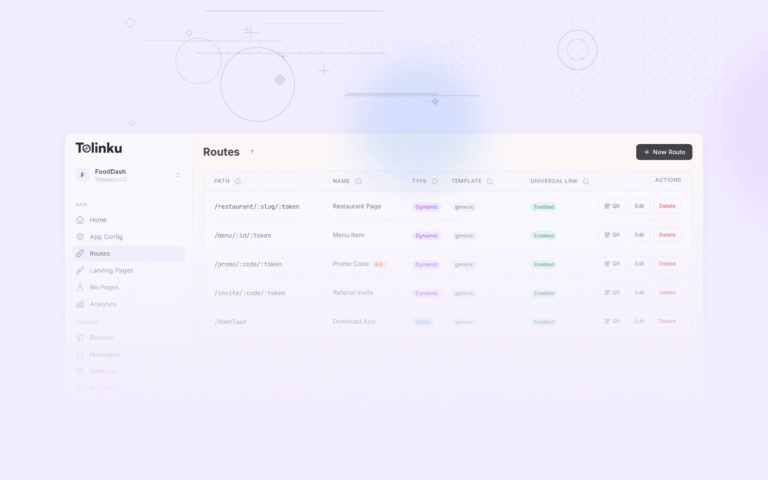
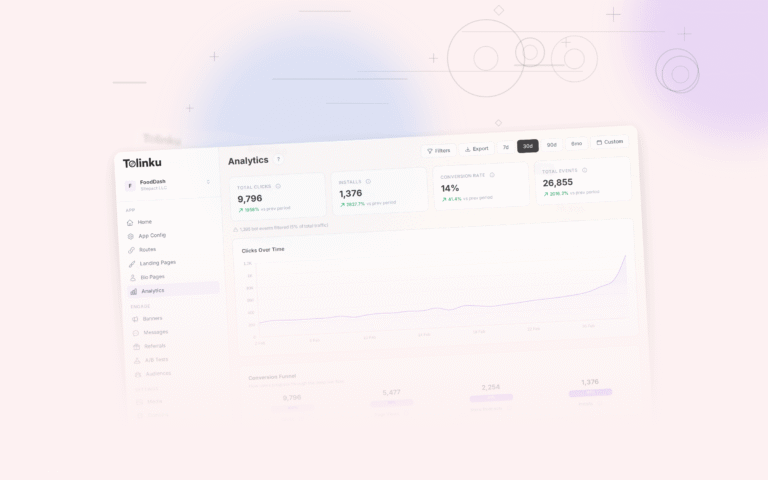
Tolinku scores well on this checklist for teams prioritizing deep linking features, transparent pricing, lightweight SDKs, and privacy. Evaluate it against your specific requirements using the scoring system above.
For free tier analysis, see free deep linking tools. For the full platform comparison, see deep linking platform comparison.
Get deep linking tips in your inbox
One email per week. No spam.