

Healthcare apps handle sensitive patient data, operate under strict regulations (HIPAA, HITECH, GDPR for health data), and serve users who need quick access to specific content: their upcoming appointment, their lab results, their medication schedule. Deep linking makes these flows faster, but the implementation must account for security and compliance requirements that other industries do not face.
This guide covers deep linking patterns specific to healthcare and telehealth. For security best practices with sensitive data, see security best practices for fintech deep links (the principles apply to healthcare). For compliance considerations, see fintech compliance and deep links.
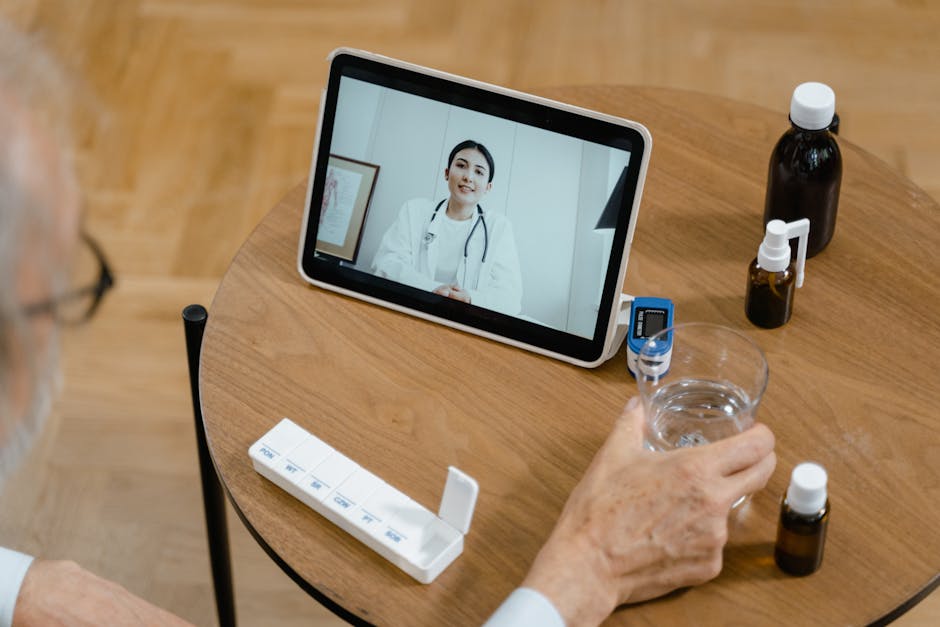 Photo by Tima Miroshnichenko on Pexels
Healthcare Deep Link Use Cases
Common Flows
| Use Case | Deep Link | Context |
|---|---|---|
| Appointment reminder | /appointments/{id} |
Push notification links to appointment details |
| Telehealth visit | /visit/{session-id} |
Join a video call directly |
| Lab results | /results/{order-id} |
View specific test results |
| Prescription refill | /prescriptions/{rx-id}/refill |
One-tap refill request |
| Provider profile | /providers/{npi} |
View doctor's profile and book |
| Message from doctor | /messages/{thread-id} |
Read a specific message |
The HIPAA Constraint
HIPAA (Health Insurance Portability and Accountability Act) restricts how Protected Health Information (PHI) is transmitted and displayed. For deep links, this means:
Never include PHI in the URL:
WRONG: /appointments/john-smith-cardiology-2026-06-24
WRONG: /results/blood-test-glucose-high
RIGHT: /appointments/a1b2c3d4
RIGHT: /results/r5e6f7g8
The URL is visible in browser history, server logs, analytics tools, and potentially in cleartext HTTP headers. Use opaque identifiers, not descriptive slugs.
Secure Deep Link Architecture
Authentication Before Content
Every deep link to patient content must require authentication:
func handleDeepLink(_ url: URL) {
    let path = url.path

    // Store the intended destination
    UserDefaults.standard.set(path, forKey: "pendingDeepLink")

    // Check authentication
    if AuthManager.shared.isAuthenticated {
        if AuthManager.shared.requiresBiometric(for: path) {
            promptBiometric { success in
                if success { navigateTo(path) }
            }
        } else {
            navigateTo(path)
        }
    } else {
        showLoginScreen()
        // After login, the pending deep link is resolved
    }
}
Session Timeout Handling
Healthcare apps typically have shorter session timeouts (5-15 minutes of inactivity). Deep links must handle expired sessions:
class DeepLinkActivity : AppCompatActivity() {
    override fun onCreate(savedInstanceState: Bundle?) {
        super.onCreate(savedInstanceState)

        val uri = intent.data ?: return
        val targetPath = uri.path ?: return

        when {
            sessionManager.isActive() -> {
                navigateTo(targetPath)
            }
            sessionManager.canRefresh() -> {
                sessionManager.refresh {
                    navigateTo(targetPath)
                }
            }
            else -> {
                // Session expired, require full login
                pendingDeepLink = targetPath
                startActivity(Intent(this, LoginActivity::class.java))
            }
        }
    }
}
URL Expiration
Deep links in healthcare notifications should expire:
// Server: generate expiring deep link tokens
function generateAppointmentLink(appointmentId, expiresIn = '24h') {
  const token = jwt.sign(
    { appointmentId, type: 'appointment_view' },
    process.env.DEEP_LINK_SECRET,
    { expiresIn }
  );

  return `https://yourapp.com/dl/${token}`;
}

// App: validate the token
function handleTokenDeepLink(token) {
  try {
    const payload = jwt.verify(token, process.env.DEEP_LINK_SECRET);
    navigateTo(`/appointments/${payload.appointmentId}`);
  } catch (err) {
    if (err.name === 'TokenExpiredError') {
      showMessage('This link has expired. Please check the app for your appointment details.');
    }
  }
}
Telehealth Visit Deep Links
Joining a Video Call
The most time-sensitive deep link in healthcare: joining a telehealth appointment.
func handleVisitDeepLink(_ url: URL) {
    guard let sessionId = url.pathComponents.last else { return }

    // Verify the session belongs to this patient
    TelehealthService.shared.validateSession(sessionId) { result in
        switch result {
        case .valid(let session):
            if session.status == .inProgress || session.status == .waiting {
                joinVideoCall(session)
            } else if session.status == .scheduled {
                showWaitingRoom(session)
            } else {
                showMessage("This visit has ended.")
            }
        case .expired:
            showMessage("This visit link has expired.")
        case .unauthorized:
            showLoginScreen()
        }
    }
}
Pre-Visit Deep Links
Send patients a deep link before their appointment that opens a pre-visit checklist:
Push notification: "Your appointment with Dr. Smith is in 30 minutes"
Deep link: https://yourapp.com/visit/abc123/prepare
  → Opens pre-visit checklist:
    - Confirm your medications
    - List your symptoms
    - Check your device camera and microphone
    - Join waiting room
Notification Deep Links
Push Notification Best Practices
Healthcare push notifications with deep links must balance urgency with privacy:
// Server: send HIPAA-compliant push notification
async function sendAppointmentReminder(patient, appointment) {
  await pushService.send(patient.deviceToken, {
    // Notification content (visible on lock screen)
    title: "Upcoming Appointment",
    body: "You have an appointment tomorrow", // No PHI in the notification
    // Deep link data (only accessible inside the app)
    data: {
      deepLink: `/appointments/${appointment.id}`,
      type: "appointment_reminder"
    }
  });
}
The notification text must not contain PHI (patient name, diagnosis, provider name). The deep link ID is opaque and only meaningful inside the authenticated app.
SMS Deep Links
SMS appointment reminders with deep links:
"Your healthcare appointment is tomorrow at 2:00 PM.
View details: https://yourapp.com/dl/eyJhcG..."
The deep link token is encrypted and expires after use. The SMS does not mention the provider, specialty, or location.
Web Fallback for Healthcare
Unauthenticated Landing Pages
The web fallback for healthcare deep links should not show patient data:
<!-- Web fallback for /appointments/{id} -->
<div class="healthcare-landing">
  <h1>View Your Appointment</h1>
  <p>Sign in to view your appointment details.</p>

  <a href="https://apps.apple.com/app/yourapp/id123" class="store-link">
    Download on the App Store
  </a>
  <a href="https://play.google.com/store/apps/details?id=com.yourapp" class="store-link">
    Get it on Google Play
  </a>

  <p class="disclaimer">
    For your privacy, appointment details are only available in the app.
  </p>
</div>
No patient information is displayed on the web page. The page's sole purpose is to get the user into the authenticated app.
Compliance Requirements
HIPAA Technical Safeguards
Deep links in healthcare must comply with HIPAA's technical safeguards:
| Safeguard | Deep Link Implementation |
|---|---|
| Access control | Authentication required before showing PHI |
| Audit controls | Log all deep link accesses with timestamps |
| Integrity | Use signed/encrypted tokens in deep link URLs |
| Transmission security | HTTPS only, no HTTP deep links |
| Automatic logoff | Session timeout after inactivity |
BAA Considerations
If you use a third-party deep linking service, it may be considered a Business Associate under HIPAA if it processes URLs that contain PHI or can be correlated with patient identity. Use opaque identifiers to avoid this issue, or ensure the service has a Business Associate Agreement (BAA).
Tolinku for Healthcare Apps
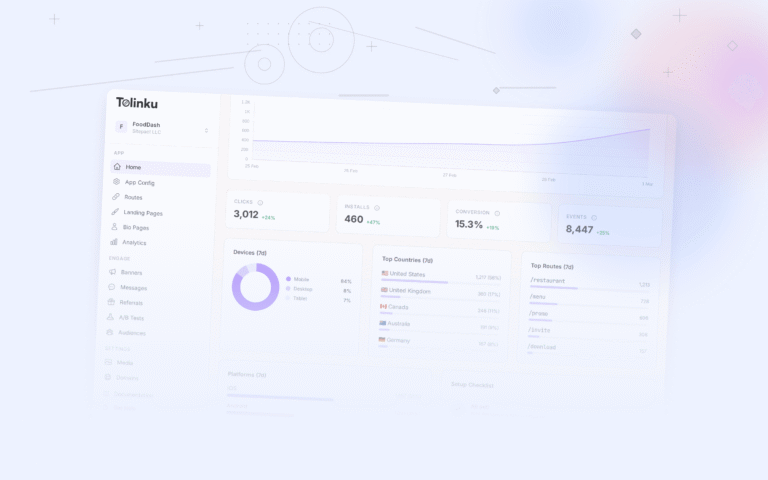
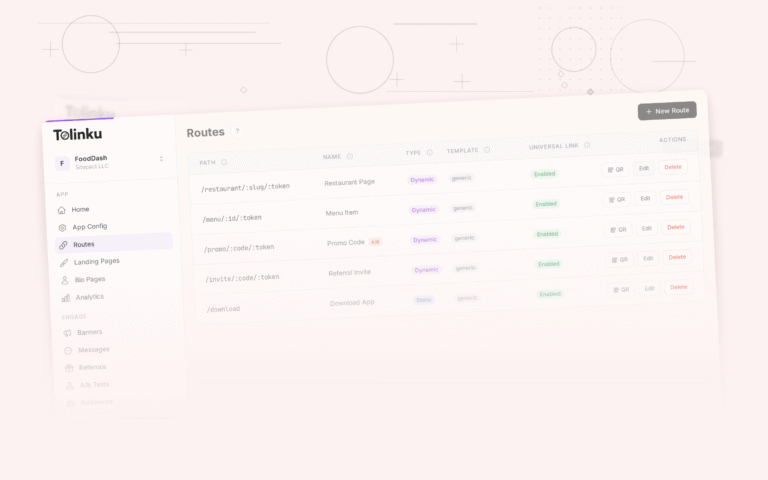
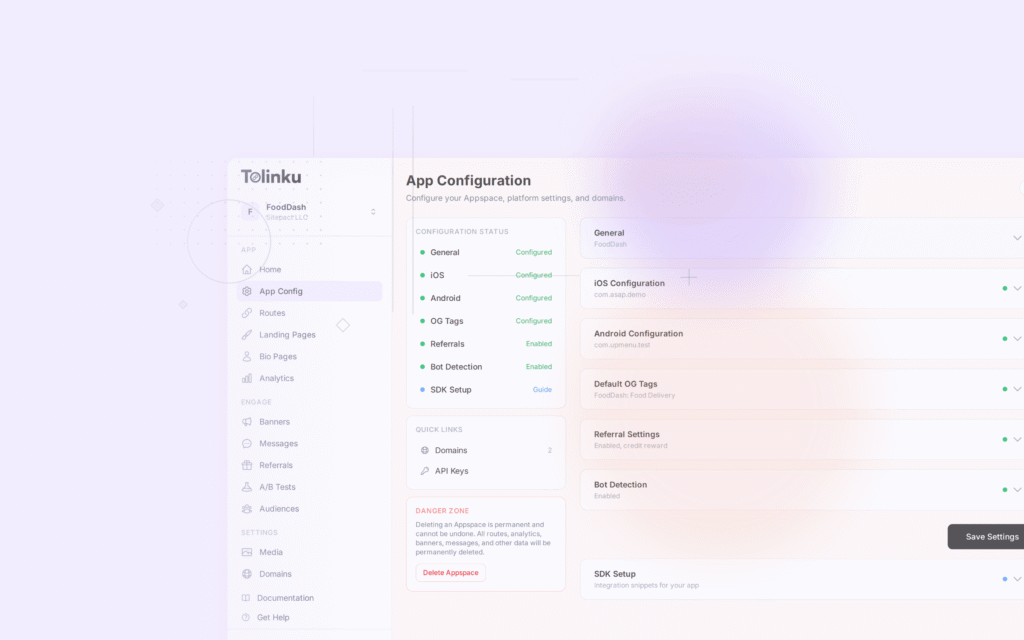
Tolinku handles deep link routing without accessing patient data. Deep link URLs use opaque identifiers, and Tolinku routes to the app or web fallback without interpreting the content. Configure your routes in the Tolinku dashboard.
For the broader deep linking trends, see the future of mobile deep linking.
Get deep linking tips in your inbox
One email per week. No spam.