AppsFlyer is a mobile measurement partner (MMP) that includes deep linking through its OneLink product. It's designed for teams that need full-stack mobile attribution: install tracking, event attribution, fraud detection, audience segmentation, and deep linking bundled together.
For teams that use the full suite, the pricing makes sense. For teams that primarily need deep linking, AppsFlyer's pricing model often means paying for capabilities they don't use. For a direct feature-by-feature comparison, see the AppsFlyer vs Tolinku breakdown.
AppsFlyer's Pricing Structure
AppsFlyer uses a conversion-based pricing model:
Free Tier (Zero Plan)
- Up to 10,000 conversions per month (both organic and non-organic)
- Basic attribution
- OneLink deep linking
- Limited features and data retention
Paid Tiers
AppsFlyer's paid pricing is based on:
- Non-organic installs (NOI): Installs attributed to paid media
- Feature packages: Different bundles for attribution, fraud protection, audiences, etc.
- Contract length: Annual contracts with monthly payment options
Estimated pricing ranges (based on publicly available information):
- Growth plan: Starting around $500-$1,000/month for smaller volumes
- Enterprise: Custom pricing starting in the thousands per month, scaling with NOI volume
Like Branch, AppsFlyer doesn't publish exact pricing. You need to contact sales for a quote.
What's Included
AppsFlyer's core offering includes:
- Attribution: Multi-touch attribution, SKAdNetwork support, SKAN 4.0 conversion models
- OneLink deep linking: Deep links, deferred deep linking, smart banners
- Protect360: Fraud detection and prevention
- Audiences: User segmentation for retargeting
- Cost aggregation: Pulling media cost data from ad networks
- Data locker: Raw data export to your own systems
- Incrementality: Controlled experiments for measuring true campaign impact
Where the Costs Add Up
Feature Bundling
AppsFlyer's pricing bundles attribution, fraud protection, and deep linking together. If you only need deep linking (OneLink), you're still exposed to the full platform's pricing structure.
The free tier's 10,000 conversion limit includes ALL conversions (organic and non-organic). For an app with moderate organic growth, you can exceed this limit without any paid marketing spend.
Scaling Costs
As your app grows, AppsFlyer costs scale with non-organic installs. If you run large paid campaigns (tens of thousands of installs per month), the attribution costs can be significant. This is the intended use case, but teams that run modest paid campaigns alongside strong organic growth may find the pricing disproportionate.
SDK Complexity
AppsFlyer's SDK includes attribution logic, fraud detection signals, and data collection beyond what's needed for deep linking. This adds to your app's size and complexity.
When AppsFlyer Makes Sense
AppsFlyer is the right choice when:
- You spend heavily on paid UA: If you're investing $50K+ per month in paid acquisition across multiple ad networks, attribution data is essential for optimization. AppsFlyer's attribution is robust and well-integrated.
- You need fraud protection: If you're running large CPI campaigns, fraud detection saves money. AppsFlyer's Protect360 catches common fraud patterns.
- You need ad network integrations: AppsFlyer integrates with hundreds of ad networks and provides automated postbacks for optimization.
- You need a single source of truth: If your marketing team needs one dashboard that shows all paid and organic channels with cost data, AppsFlyer consolidates this.
When to Consider Alternatives
AppsFlyer is more than you need when:
- Deep linking is your primary need: If you want links that open your app and route users to specific content, you don't need a full MMP.
- You have modest paid UA spend: If your paid acquisition is small or non-existent, you're paying for attribution infrastructure you don't leverage.
- You want predictable costs: Conversion-based pricing means your costs fluctuate with campaign volume. Fixed pricing is easier to budget.
- You want simplicity: If your team doesn't have a dedicated growth or marketing ops person to manage the AppsFlyer dashboard, the platform's complexity goes underutilized.
Tolinku as a Deep Linking Alternative
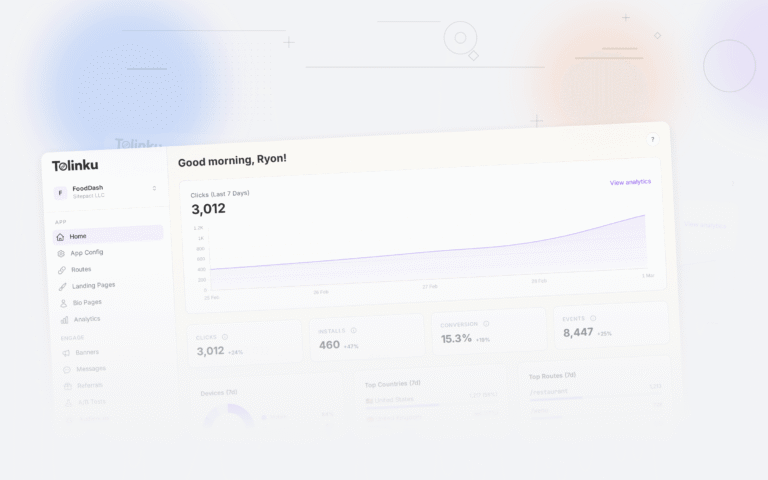
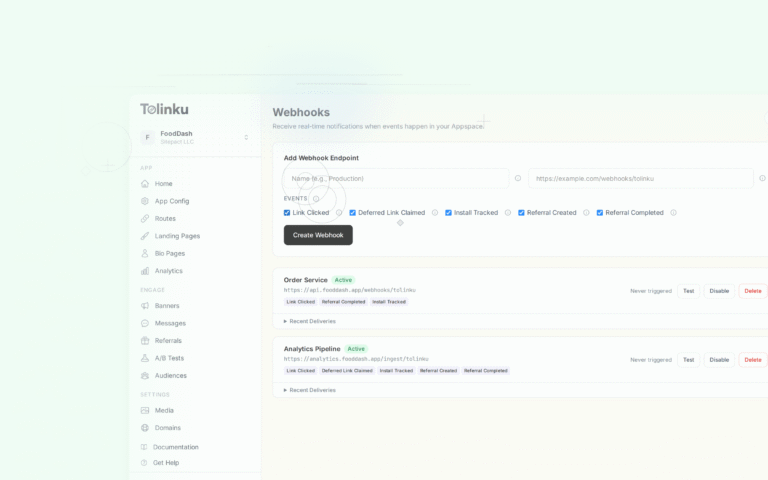
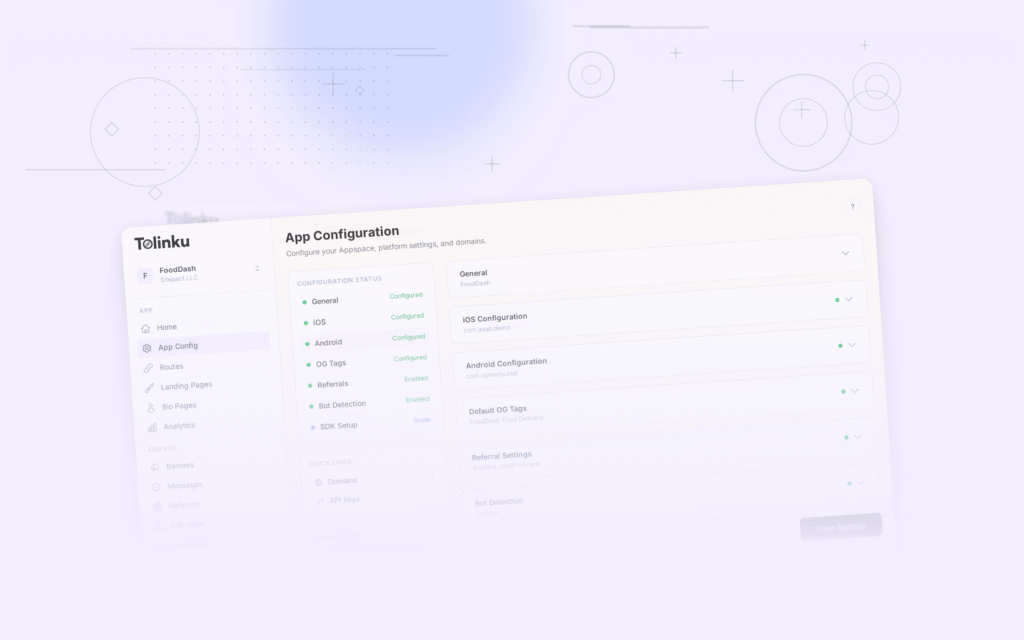
If your primary need is deep linking (not full attribution), Tolinku covers the deep linking features at a fraction of the cost:
| Feature | AppsFlyer OneLink | Tolinku |
|---|---|---|
| Deep linking | Yes | Yes |
| Deferred deep linking | Yes | Yes |
| Short links | Yes | Yes |
| Smart banners | Yes | Yes |
| Custom domains | Yes | Yes |
| A/B testing | Limited | Yes |
| Click analytics | Yes | Yes |
| Referral tracking | Basic | Full referral program |
| Full attribution (MMP) | Yes | First-party analytics |
| Fraud detection | Yes | No |
| Ad network postbacks | Yes | No |
Cost Comparison
| Usage Level | AppsFlyer (Estimated) | Tolinku |
|---|---|---|
| Under 10K conversions/mo | Free (limited) | Free |
| 50K clicks/mo | ~$500-$1,500/mo | $39/mo |
| 250K clicks/mo | ~$2,000-$5,000/mo | $79/mo |
| 500K clicks/mo | ~$5,000-$10,000/mo | $149/mo |
The difference is significant, especially at scale. If you don't need MMP-level attribution, the savings from switching to a focused deep linking platform fund other growth initiatives. For a side-by-side look at capabilities across platforms, see the Deep Linking Feature Comparison Matrix.
Hybrid Approach
You don't have to choose one or the other. Some teams use:
- Tolinku for deep linking, smart banners, referral programs, and link management
- AppsFlyer (on a lower tier) for paid UA attribution and fraud detection
This separates concerns: your deep linking is handled by a dedicated, cost-effective platform, while your attribution runs on a minimal AppsFlyer plan that only needs to handle paid conversions.
Making the Decision
- Audit your actual usage: Which AppsFlyer features does your team use weekly? If it's primarily OneLink and basic analytics, you're paying for unused capabilities.
- Calculate true cost: Include not just the AppsFlyer bill, but engineering time for SDK maintenance, dashboard management, and feature configuration. The Total Cost of Ownership for Deep Linking guide walks through the full calculation.
- Test an alternative: Set up a free Tolinku account and try it alongside AppsFlyer. Compare the deep linking experience, analytics, and ease of use.
- Decide based on data: If AppsFlyer's attribution directly informs decisions that drive measurable ROI, it's worth the cost. If not, switch to a focused deep linking platform and reinvest the savings.
For step-by-step migration instructions, see Migrating from AppsFlyer OneLink to Tolinku. For the general migration guide, see Migrating to Tolinku from Branch, Firebase, and AppsFlyer.
Get deep linking tips in your inbox
One email per week. No spam.