

Community-driven growth is the slowest to start and the hardest to fake. It is also the most durable. A community of engaged users provides organic downloads, real feedback, content creation, and word-of-mouth that no ad campaign can replicate.
For word-of-mouth strategies, see word-of-mouth growth strategies for mobile apps. For the full growth playbook, see mobile app growth: 25 strategies that work in 2026.

Why Community Matters for App Growth
| Growth Channel | CAC Trend | Retention Impact | Sustainability |
|---|---|---|---|
| Paid ads | Rising yearly | Low (users acquired via ads churn faster) | Depends on budget |
| Influencers | Rising yearly | Medium | Campaign-dependent |
| Community | Low (time investment) | High | Self-sustaining once established |
| Organic search | Low | Medium | Sustainable but slow |
Community members:
- Have 2-3x higher retention than users acquired through ads.
- Provide product feedback before you build the wrong thing.
- Create content (reviews, tutorials, posts) that attracts new users.
- Defend your brand during negative PR.
Where to Build Your Community
Owned Platforms
| Platform | Best For | Effort |
|---|---|---|
| Discord server | Real-time chat, gaming and tech apps | Medium |
| In-app community | Directly in your app, highest engagement | High |
| Forum (Discourse, Circle) | Long-form discussions, knowledge base | Medium |
| Email community (newsletter) | Updates, tips, stories | Low |
Third-Party Platforms
| Platform | Best For | Control |
|---|---|---|
| Reddit (own subreddit) | Niche communities, authentic discussions | Low |
| Facebook Group | Broad audience, older demographics | Medium |
| Twitter/X | Real-time engagement, tech and media apps | Low |
| LinkedIn Group | B2B and professional apps | Medium |
Recommendation
Start with one platform where your users already spend time. A Discord server with 100 active members is more valuable than a Facebook Group with 10,000 inactive members.
Community Growth Stages
Stage 1: Seed (0-100 members)
Your first 100 community members set the culture. Recruit them personally:
- Reach out to your most active users (check in-app analytics for power users).
- Invite beta testers and early adopters.
- Post in existing communities where your target audience hangs out (Reddit, forums, social media).
- Include a community link in your app's onboarding flow.
At this stage, you (the founder or team member) should be personally active in every conversation.
Stage 2: Grow (100-1,000 members)
With a foundation of active members:
- Add community links to your app (settings page, help section, share cards).
- Mention the community in marketing emails.
- Feature community members in your content (blog posts, social media).
- Start recurring events (weekly Q&A, monthly challenges).
Appoint 2-3 active members as moderators. They set the tone and reduce your workload.
Stage 3: Scale (1,000+ members)
The community generates its own momentum:
- New members join because they see existing discussions and value.
- Members answer each other's questions (reducing support load).
- User-generated content attracts new users via search and social.
- Community events become traditions.
At this stage, your role shifts from creator to curator. Guide the direction; let the community fill it with content.
Community Activities That Drive Growth
Challenges and Competitions
Monthly or weekly challenges encourage participation and sharing:
- Fitness app: "30-day plank challenge. Share your progress."
- Photo app: "Best sunset photo this week. Winner gets featured."
- Finance app: "No-spend weekend challenge. Track with [App Name]."
- Language app: "100-word story in Spanish. Community votes."
Participants share their entries on social media, exposing the app to their networks.
User Spotlights
Feature community members and their stories:
Community Spotlight: Sarah's Fitness Journey

Sarah joined [App Name] 6 months ago. She's completed 180 workouts
and lost 15 lbs. Here's how she uses the app:
[Link to in-app profile or blog post]
This validates the product through real user stories (not fabricated testimonials; use actual community members who volunteer).
Beta Testing Groups
Give community members early access to new features:
- They feel valued (exclusive access).
- You get real-world testing before public release.
- They become advocates for features they helped shape.
Knowledge Sharing
Encourage members to share tips, workflows, and templates:
- Productivity app: "Share your task management system."
- Design app: "Post your best templates for others to use."
- Cooking app: "Share your weekly meal prep plan."
This creates a library of user-generated content that attracts new users searching for solutions.
Deep Links for Community
Use deep links to connect community content to the app:
"Check out Sarah's workout routine: https://yourapp.com/routine/sarah-hiit-30"
When a community member shares a link:
- App installed: Opens directly to the shared content.
- App not installed: Shows a preview and links to the app store. After installation, the user sees the shared content via deferred deep linking.
Measuring Community Impact
Direct Metrics
| Metric | What It Measures |
|---|---|
| Active members | Community health (daily/weekly active) |
| Posts per week | Engagement level |
| Response time | How quickly questions get answered |
| Member-to-member interactions | Self-sustainability |
Growth Metrics
| Metric | What It Measures |
|---|---|
| Community-sourced installs | Installs from community-shared links |
| Retention of community members vs non-members | Community's impact on retention |
| Support tickets from community members | Community's impact on support load |
| Feature requests from community | Community's product impact |
Common Mistakes
| Mistake | Impact | Fix |
|---|---|---|
| Building on the wrong platform | Low engagement | Go where your users already are |
| Only broadcasting (no conversation) | Users feel like subscribers, not members | Ask questions, respond to every post early on |
| Ignoring negative feedback | Trust erodes | Address issues publicly and honestly |
| Growing too fast | Culture dilutes, spam increases | Grow steadily, moderate actively |
| No connection to the app | Community is separate from the product | Use deep links, in-app community features |
Tolinku for Community-Driven Growth
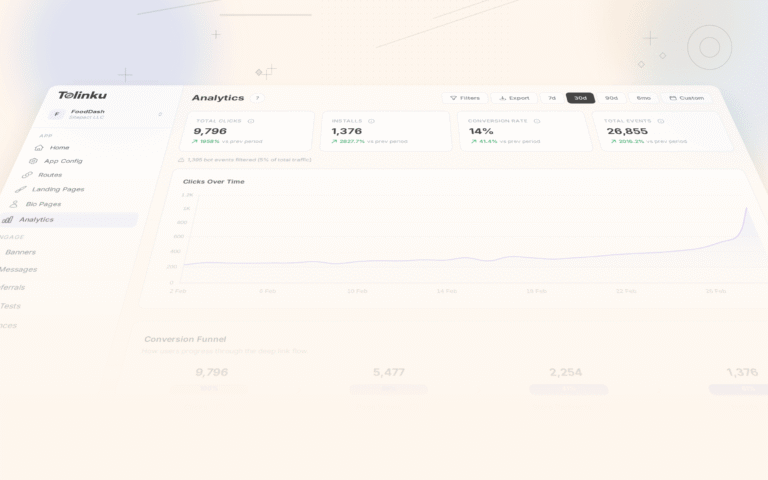
Tolinku provides deep links that community members can share. When someone in your Discord or Reddit community shares a link to in-app content, Tolinku handles platform detection and deferred deep linking. Analytics show which community channels drive the most installs.
For organic growth channels, see organic growth channels for mobile apps. For the full growth guide, see mobile app growth: 25 strategies that work in 2026.
Get deep linking tips in your inbox
One email per week. No spam.