

Print isn't dead. It's just disconnected. Magazines, flyers, packaging, billboards, and direct mail still reach millions of people daily, but there's historically been no clean way to move those viewers into your mobile app. QR codes change that by creating a scannable bridge from any physical surface to any digital destination.
This guide covers how to use QR codes effectively across different print formats, with practical advice for design, placement, and measurement.
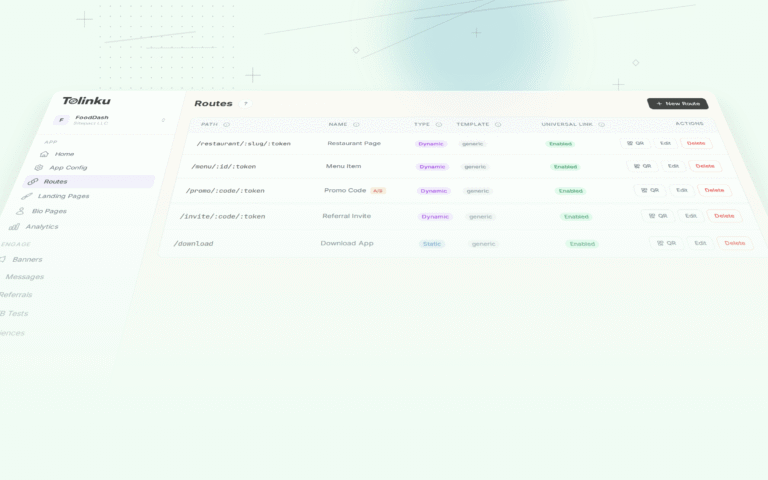
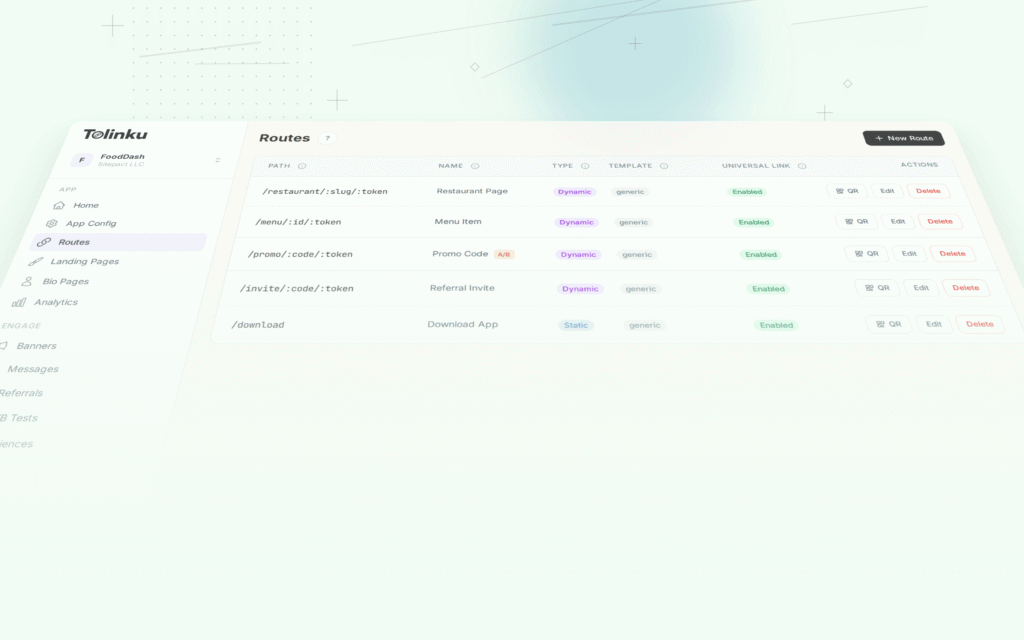
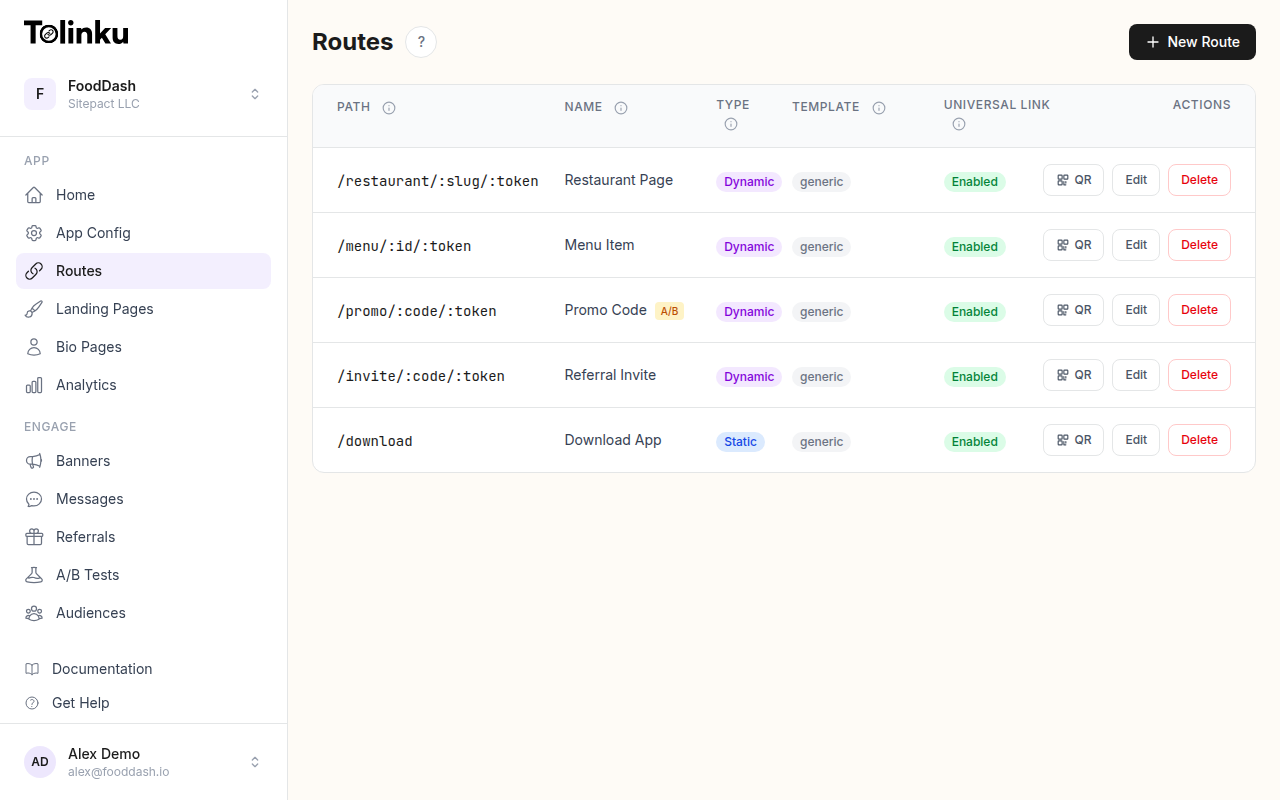 Tolinku route configuration with QR code generation for each deep link.
Why Print + QR Works
The core problem with print marketing for apps is the friction gap. A user sees your ad in a magazine. They're interested. Now they have to:
- Remember your app name
- Open their phone's app store
- Search for your app (hoping they spell it right)
- Download and open it
- Navigate to the specific content from the ad
That's five steps, and users drop off at every one. A QR code reduces this to:
- Scan the code
- Land directly on the relevant content
With deferred deep linking, even users who don't have your app yet can scan the code, install from the app store, and open directly to the promoted content on first launch.
Format-Specific Best Practices
Magazines and Print Ads
Magazine readers are often in a leisurely browsing mindset, making them receptive to scanning. However, magazine QR codes face unique challenges:
Sizing: Full-page ads can accommodate large QR codes (4+ cm), but quarter-page ads are tighter. Never go below 2.5 cm in a magazine context. Readers hold magazines at arm's length, so the code needs to be large enough to scan from 30-40 cm away.
Placement: Put the QR code near the call-to-action, not buried at the bottom of the page. Eye-tracking studies show readers focus on headlines and images first. Place the code near the visual anchor of your ad.
Paper quality: Glossy magazine paper can cause glare under certain lighting. If possible, test scanning your code on the actual paper stock before committing to a print run.
CTA: "Scan to shop the collection" or "Scan for an exclusive 20% off" works better than a bare code with no explanation.
Flyers and Brochures
Flyers are handed directly to people, creating a high-intent moment. The person is already engaged enough to accept the flyer.
Make the code prominent: The QR code should be one of the first things someone sees, not an afterthought in the footer. Consider making it the primary call-to-action.
One code per flyer: Don't overload a flyer with multiple QR codes pointing to different destinations. Pick the single most important action and make that the code's destination. For multiple offers, use a landing page that lists all options.
Durability: Flyers get folded, crumpled, and stuffed in pockets. Ensure the code is positioned where folds won't cross through it. Center placement is safest.
Billboards and Large-Format Signage
Billboards present a paradox: they're huge, but they're viewed from far away, often at high speed.
Size: QR codes on billboards need to be at least 30 cm (12 inches) to be scannable from typical viewing distances. For highway billboards, the code may need to be 50+ cm.
Context matters: A billboard on a busy highway isn't a great QR code placement (drivers shouldn't be scanning while driving). But a billboard at a bus stop, train station, or pedestrian area? That's ideal. Captive audiences with idle time and phones in hand.
Companion URL: Always include a short, branded URL alongside the QR code for people who can't scan. go.yourapp.com/offer is easy to remember and type later.
Direct Mail
Direct mail has some of the highest QR code scan rates because recipients are holding the material in their hands, usually at home with time and privacy to scan.
Personalization: If your direct mail is personalized, consider generating unique QR codes per recipient. Each code can point to a personalized landing page or carry a unique promo code. This requires dynamic routes with parameters.
Postcard format: Postcards outperform letters for QR code engagement because the code is immediately visible without opening an envelope.
Reply incentive: "Scan to claim your exclusive offer" with a clear value proposition drives higher scan rates than generic codes.
Product Packaging
Product packaging QR codes have the longest lifespan of any print placement. A code on a cereal box might be scanned months after printing.
Use dynamic QR codes: Since you can't reprint packaging easily, dynamic QR codes let you update the destination after manufacturing. Point to seasonal promotions, updated instructions, or loyalty program sign-ups.
Placement: Put the code where users naturally look for information (near the nutrition label, on the back panel, or inside the lid). Avoid placing it on curved surfaces where possible, or increase the size by 20-30% to compensate for distortion.
Multi-language: If your product sells in multiple markets, the QR code destination should detect the user's language and serve appropriate content.
Business Cards
Business cards are perhaps the most natural QR code placement. The recipient already wants your information, and scanning is faster than typing a URL or adding contact details manually.
Content options: Point to your LinkedIn profile, a digital business card (vCard), your company website, or a booking link. Use a branded short link as the encoded URL.
Size: Business cards are small, but the viewing distance is very close (15-20 cm). A 2 cm QR code works well.
Design integration: Business card QR codes are a great candidate for logo embedding and brand colors, since they'll be examined closely. Follow the guidelines in QR Code Design Best Practices.
Measuring Print Campaign Performance
The biggest advantage of QR codes in print is measurability. Without them, print marketing ROI is largely guesswork. With tracked QR codes, you get concrete data.
Create Separate Routes Per Placement
Don't use the same QR code across all your print materials. Create a unique route for each placement:
/summer-magazine-adfor the magazine placement/summer-bus-shelterfor transit advertising/summer-direct-mailfor the mailer
This lets you compare channel performance in your analytics dashboard.
Track the Full Funnel
A scan is the top of the funnel. Track what happens next:
- Scan → Recorded by the QR code redirect
- Landing page view → Recorded by web analytics
- App install → Recorded by your deep linking platform
- In-app conversion → Recorded by app analytics
Use UTM parameters on your destination URLs to connect the QR scan to downstream web analytics data.
Calculate Print ROI
With scan and conversion data, you can calculate actual ROI:
Cost per scan = print cost / total scans
Cost per install = print cost / installs from QR
Cost per conversion = print cost / conversions from QR
Compare these metrics across channels and campaigns to optimize your print marketing budget.
Common Mistakes
No call-to-action: A QR code without context gets ignored. Always explain what scanning does and why the user should bother.
Code too small: The most common technical failure. When in doubt, make the code bigger.
Static codes on long-lived materials: Product packaging, signage, and anything that will be in use for months should always use dynamic QR codes.
No fallback for desktop: Some users will type the URL instead of scanning. Include a readable URL alongside the code, and make sure the destination works in desktop browsers too.
Testing only on screen: Always test your QR code on the actual printed material. Screen rendering and print rendering produce different results, especially on textured or colored paper.
Getting Started
Pick one print channel to start with. Create a dedicated route in your deep linking platform, download the QR code, add a clear CTA, and publish. Monitor scans for two weeks to establish a baseline, then experiment with design changes, placement, and messaging.
For a comprehensive overview of QR codes in mobile strategy, see QR Codes and Short Links for Mobile Apps.
Get deep linking tips in your inbox
One email per week. No spam.